

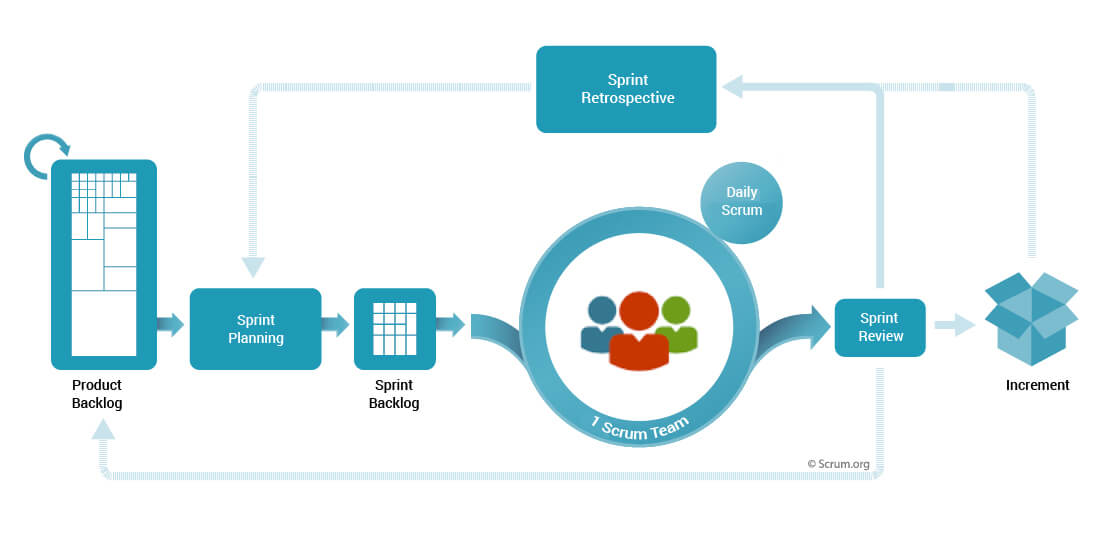
We facilitate daily,15-min, “stand-up meetings” (a.k.a “Scrum meetings”) to allow the team to share what was achieved yesterday, what will be achieved today, and define any areas where help is needed. We watch for issues and help remove any roadblocks.
In addition to the daily stand-up meetings, we like to have a weekly collaborative work session with you, where we have more time to go into depth about a particular topic.
After each sprint, we review all features of what has been delivered to confirm the deliverables work as expected and validate business benefits. The team brainstorms ideas to resolve any issues and reprioritize, add/remove features, etc.
As the name implies, the Sprint Retrospective is an opportunity for our collaborative project team to look back and discuss what went well, what could improve, and make any commitments to improve during the following sprint.
Perhaps the most important aspect of our approach is making sure we show our progress (usually in the form of wireframe prototypes or functional webpages) to your customers. Early on, we work with you to identify select customers who can help in our collaborative design process. Depending on the project and where we are in the development process, we either walk the end customer through a demo, or we let the customer use the product on their own while we observe.
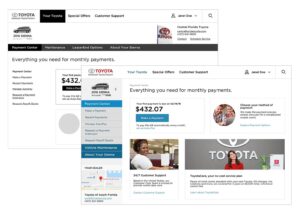
The prototypes we share with customers can be low- or high-fidelity to illustrate the final layout and functionality of key screen views.


The project will close when all features are completed or when no time or budget remains. We ensure all deliverables are completed and capture lessons learned.